
Back in the day when I did a bit of flying I remember the use of fuel densities when calculating fuel requirements/weights for a trip which got me thinking about how much fuel density changes with temperature. This chart is for aviation fuel which is a little different (petrol is about .737 @ 15° C) but no doubt the density change with temperature would be very similar. I have tried touching the fuel rail on the L67 after a decent trip and it was very hot so large changes in temp are normal which would effect fuel density.
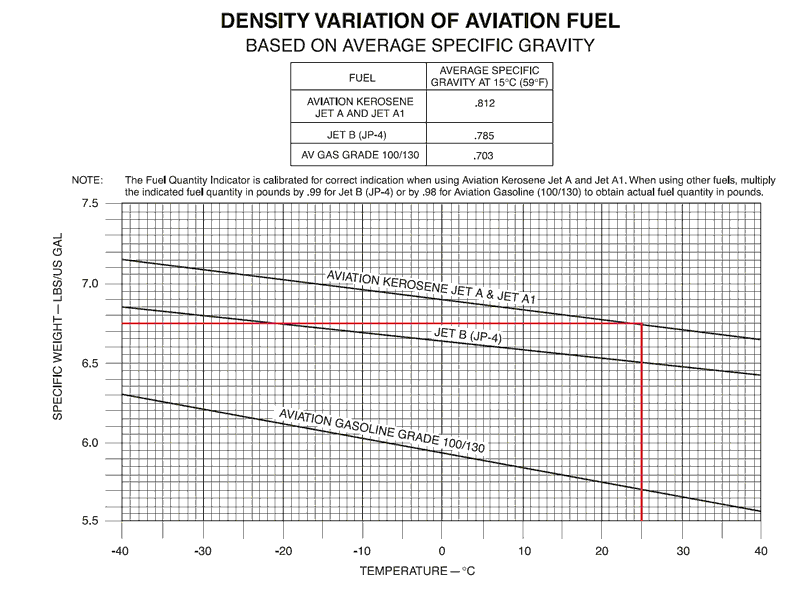
Using that chart (for 100/130 grade fuel) you have approx a 5.3% change in density with a 32° C change in temp
You should probably also take into consideration that Holden allowed a fairly large space within the fuel tank above the filler to allow for expansion.....
edit: which gets you thinking about fuel density and how it effects the engine tune. Obviously when in closed loop mode the O2 sensors will adjust the injector PW to achieve the correct AFR but when going into PE and open loop things are a little different. We know that from the factory things are tuned on the rich side which would negate any temp changes but what if you were tuning on ragged edge?

